
Does PRP Have to Be Injected? A Guide to Injection-Free PRP
Most people who have heard of platelet-rich plasma know two things about it: that it is made from their own blood, and that it is injected. The first has earned PRP lasting respect in skin rejuvenation treatments. The second is one of the main reasons so many people never go near it.
Patients often like the idea of PRP being something made from their own body, book a consultation, and quietly lose enthusiasm once the injections are described. Some decline there and then, whereas others complete a single session, decide the soreness and bruising are not for them, and never return.
So, does PRP really have to be injected? Below, we explain how injection became the standard, why it discourages so many patients, and how ARIAN Technology™ allows clinics to offer PRP without facial injections.
What Is PRP?
Platelet-rich plasma, or PRP, is a concentrated preparation of the patient’s own platelets, suspended in a small volume of their own plasma. Platelets are best known for their role in clotting, but they also carry growth factors that support the skin’s natural processes of repair and renewal. Concentrating them produces a preparation far richer in those growth factors than whole blood, and that is what makes PRP valuable in skin applications.
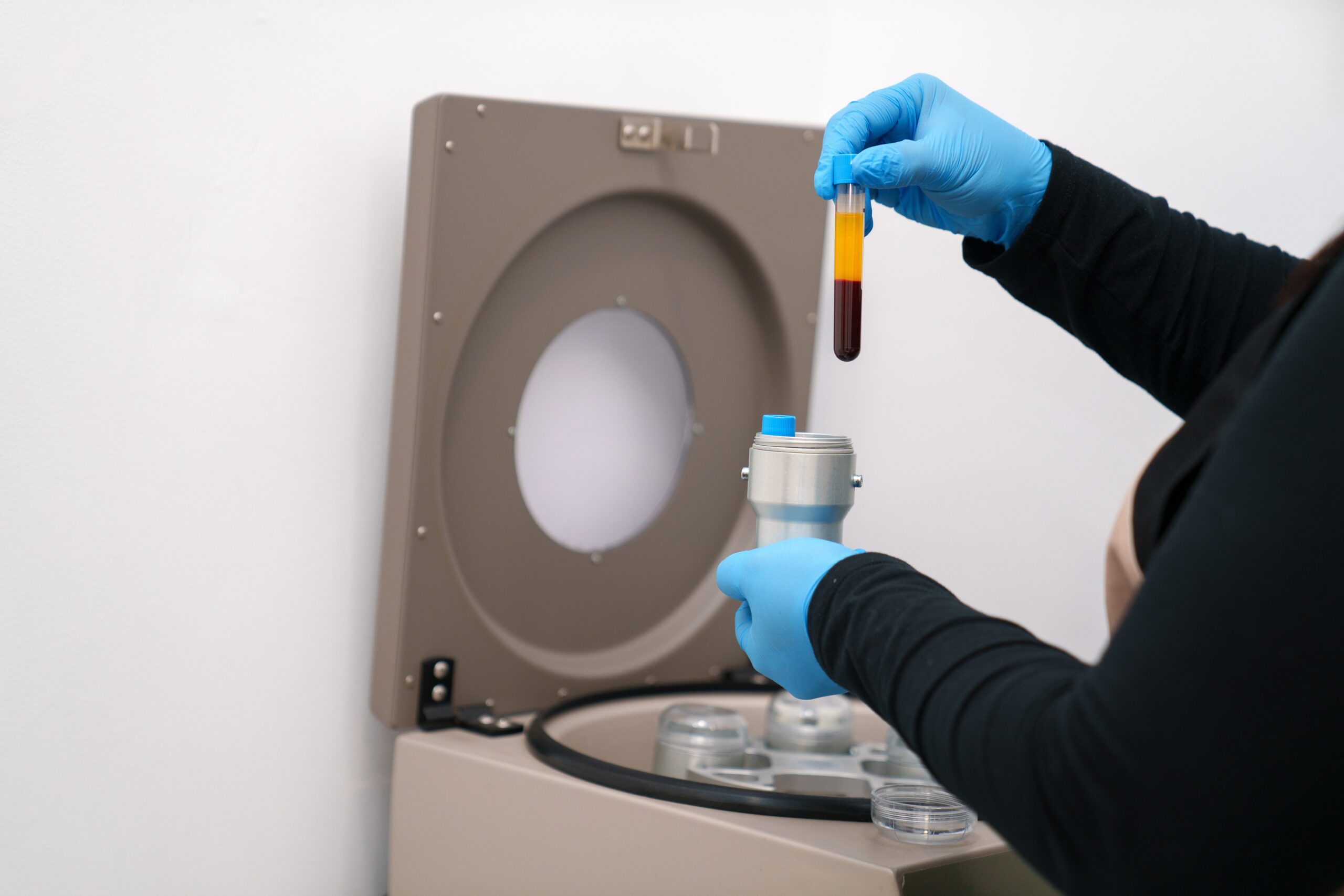
Preparing the PRP is straightforward. The clinician takes a small sample of the patient’s blood and spins it in a centrifuge, which separates it into its components and leaves a concentrated layer rich in platelets and their associated growth factors. PRP is autologous, meaning it comes from the patient’s own body, which makes it a very safe and natural treatment.
In skin applications, PRP is associated with improvements in hydration, elasticity, tone and firmness.
Why Has PRP Traditionally Been Injected?
PRP Injections became the standard for understandable reasons. It allows the practitioner to place PRP exactly where it is wanted, deep in the skin, in the amounts they judge appropriate. Most clinicians were trained in this method, so it is hardly surprising that it has shaped the way PRP is described, taught and sold across the sector.
The consequence is that, in the minds of most patients, PRP and injections have become one and the same. Few realise there is any other route, so the decision they make is rarely about PRP at all. It is a decision about needles.
Why Do Some Patients Turn PRP Down?
Some patients are comfortable with injections. For others, the method is the greatest obstacle, and their concerns fall into three main areas.
Fear of Needles
A significant proportion of people are anxious about needles, and a high number of injections into the face sit at the very top of what they are unwilling to accept. What tends to surprise practitioners is that these same patients are often quite comfortable with giving a blood sample. Their objection is specific: they do not want repeated injections into their face.
Discomfort and Downtime
Facial PRP injections can leave the skin sore, swollen or bruised for a period afterwards. For a patient with a demanding job or a full social calendar, the prospect of visible downtime is often enough to prompt a postponement, and postponed appointments have a tendency to become cancelled ones.
Can PRP Be Applied Without Injections?
PPlus Medical has developed ARIAN® Technology to help patients benefit from their own PRP without the need for multiple facial injections. The system combines two innovative medical devices, the ARIAN® Ampoules and the Digital Storage Device (DSD), both CE-marked under the EU Medical Device Regulation, and is used in conjunction with ARIAN ALTIMA, a specially formulated serum to be applied together with the patient’s own PRP.
ARIAN® Technology acts as an advanced delivery platform, helping transport the valuable components already present within the patient’s own PRP to the skin without painful injections. The biological material remains entirely the patient’s own, preserving the natural, autologous nature of the treatment while providing a needle-free alternative to traditional facial PRP injections.
How the ARIAN® Process Works
In the Clinic
The initial stages of the procedure will be entirely familiar to any clinic already offering PRP injections. The clinician takes a full medical history, confirms that the patient is suitable for treatment, draws a blood sample, and prepares the PRP using standard centrifugation techniques. To help maximise the likelihood of a successful outcome, it is highly recommended that clinics first measure the platelet count of the PRP sample to confirm that a therapeutically relevant concentration has been achieved.
The point of departure comes next. Rather than being drawn up for injection, the PRP is transferred into sterile ARIAN® Ampoules and placed within the DSD.
At Home
The patient leaves the clinic with the DSD containing fourteen ampoules of their own PRP, together with ARIAN® ALTIMA. The DSD preserves the PRP at room temperature for up to seven days, during which time the patient applies it to the skin twice daily as directed.
It is important to note that a blood sample is still taken in the clinic, as with any PRP procedure. What ARIAN® Technology removes is the need for facial injections, which many patients find the most concerning aspect of treatment.
How Does Topical Application Compare with Injection?
We would never suggest that applying PRP to the skin using ARIAN® technology replicates injection exactly. The two are different approaches. Injection delivers PRP directly into the deeper layers of the skin, allowing the platelets and growth factors to reach their target tissues more quickly.
ARIAN® Technology offers an alternative route. Through the unique formulation of ARIAN® ALTIMA, it is designed to enhance penetration into deeper layers of the skin without injecting, providing a gentler and more gradual method of delivery. Because no facial injections are required, patients also avoid the discomfort, soreness, bruising, and downtime that can follow injectable procedures.
For many patients, the question that matters most is whether they can make use of their own PRP in a way that they feel comfortable with. For clinics, it is whether they can continue the conversation with individuals who may otherwise have declined treatment because of concerns about injections.
What This Means for Clinics
Reaching Patients Who Would Otherwise Say No
Every clinic offering PRP can picture the patient who is enthusiastic about the potential benefits until injections are mentioned. For many, it is not the treatment itself that creates hesitation, but the needles. ARIAN® Technology gives you a credible alternative to offer these patients, helping to open the door to PRP for people who may never otherwise have considered treatment, including those with a genuine fear of injections.
Making Better Use of Your Team
Traditional PRP injections are technique-sensitive procedures that should only be performed by appropriately trained and experienced clinicians. ARIAN® Technology simplifies much of the patient journey. Once the initial assessment has been completed by a medical professional, the PRP preparation , patient education, and treatment provision can be managed by other trained members of the team. This helps make better use of clinical resources, improves workflow efficiency, and frees experienced practitioners to focus on higher-value injectable and procedural treatments.
Encouraging Patients to Return
Patients are naturally more likely to return for further treatment when the experience is comfortable, convenient, and fits easily into their everyday lives. By removing the anxiety, discomfort, and downtime associated with facial injections, ARIAN® Technology can help improve patient acceptance and satisfaction. Happy patients are also more likely to share their positive experiences with friends and family, generating valuable word-of-mouth referrals.
Expanding and Enhancing Your Treatment Portfolio
ARIAN® Technology can be offered as a standalone treatment or as a follow-on treatment after injectable PRP or other invasive procedures that may leave the skin red, sore, or bruised, such as laser resurfacing.
For clinics already providing PRP, ARIAN® Technology builds on expertise, equipment, and patient demand that are already in place. It creates an additional revenue opportunity, broadens the range of patients you can treat, and helps differentiate your clinic from competitors by offering an innovative, needle-free approach to PRP.
Clinics must complete ARIAN® Technology training before placing an order, either at one of our training centres or through on-site training provided by a Pplus Medical representative.
Speak to Pplus Medical about how ARIAN Technology can enhance your clinic PRP offering
To conclude, with ARIAN Technology PRP no longer needs to be injected, and can instead be applied topically. Although injection remains the most familiar route, it is also the main reason many patients turn PRP down. ARIAN Technology allows the patient’s own PRP to be applied to the skin at home across a week, removing the need for facial injections while keeping the clinic at the centre of the process.
For clinics, that means a way to reach patients who have previously said no, a more comfortable experience that encourages them to return, and a new offering that builds on the PRP expertise already in place.
If you would like to explore how ARIAN Technology could work in your clinic, get in touch with the Pplus Medical team. We would be happy to talk you through the technology, the training process and what it could mean for your patients.
Send us a message
To find out more about Pplus email us on innovation@pplusmedical.com or send a message using the button below.